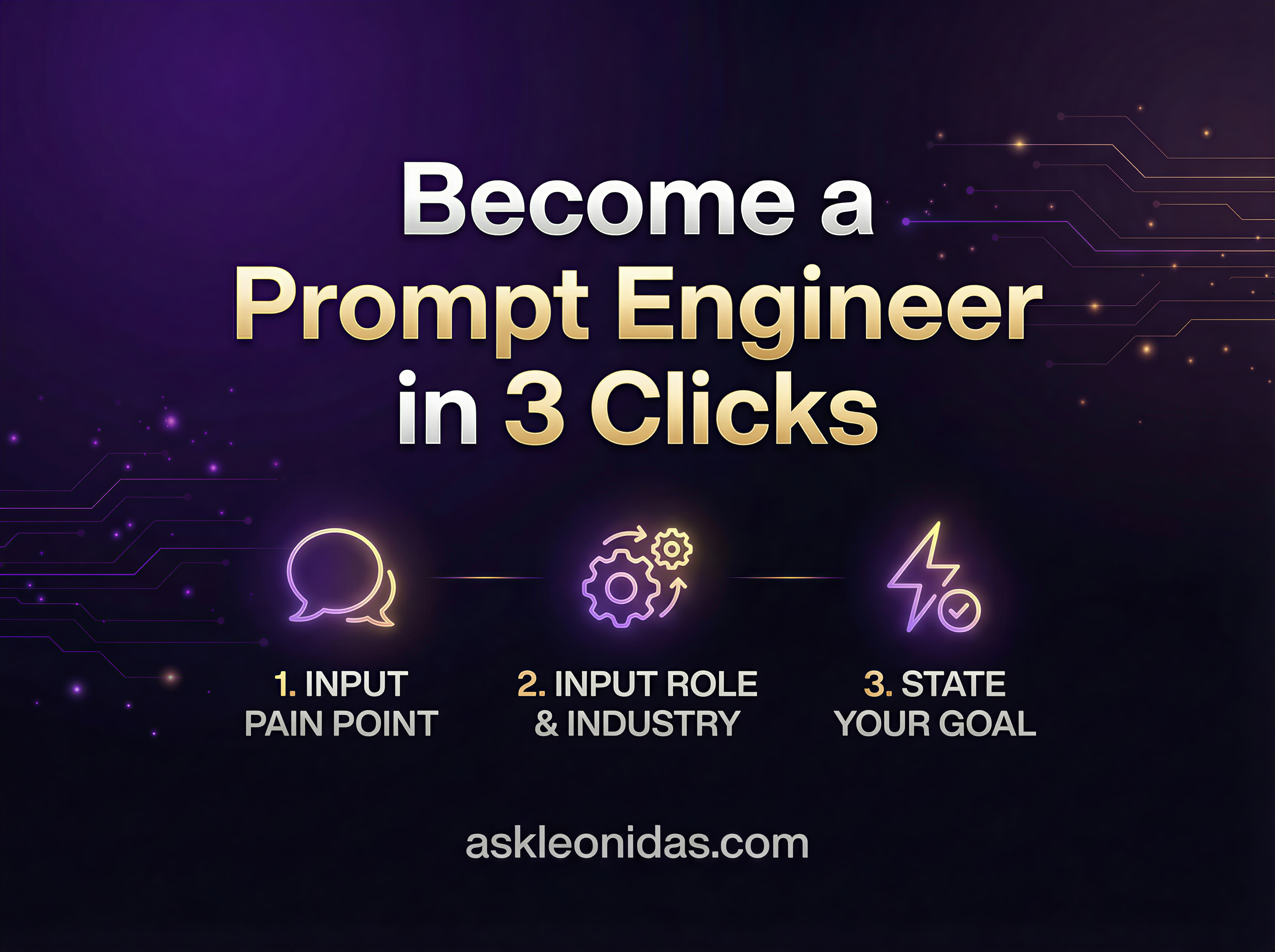
The rise of artificial intelligence has created an entirely new discipline that sits at the intersection of human creativity and machine capability. Prompt engineering has emerged as one of the most in-demand skills of the AI era, transforming how we communicate with large language models and generative AI systems.
Whether you're a developer looking to integrate AI into your applications, a content creator seeking to amplify your output, or a business leader exploring automation opportunities, understanding prompt engineering is no longer optional. It's the key that unlocks the true potential of tools like ChatGPT, Claude, Midjourney, and countless other AI systems reshaping industries worldwide.
In this comprehensive guide, we'll explore everything you need to know about prompt engineering—from foundational concepts to advanced techniques that separate casual users from true AI practitioners. By the end, you'll have a clear roadmap for developing this crucial skill set and applying it to real-world challenges.
What You'll Learn in This Guide
- Understanding the fundamentals of prompt engineering
- The science behind how AI models interpret instructions
- Core techniques and frameworks for effective prompts
- Advanced strategies used by professional prompt engineers
- Real-world applications across industries
- Career opportunities and skill development paths
- Tools and resources to accelerate your learning
What Is Prompt Engineering? A Clear Definition
Prompt engineering is the practice of designing, refining, and optimizing text inputs (prompts) to elicit specific, high-quality outputs from artificial intelligence systems. It's the art and science of communicating with AI in ways that maximize accuracy, relevance, creativity, and usefulness.
Think of it this way: AI models are incredibly powerful tools, but they require precise instructions to perform at their best. A prompt engineer is like a translator who bridges the gap between human intention and machine understanding. The quality of your prompt directly determines the quality of the AI's response.
At its core, prompt engineering involves understanding how large language models (LLMs) process and respond to text. These models have been trained on vast amounts of data and have learned patterns in language, reasoning, and knowledge. Your prompt activates specific patterns and pathways within the model, steering it toward the output you need.
The Evolution from Simple Queries to Strategic Communication
Early interactions with AI were simple: type a question, get an answer. But as AI systems have grown more sophisticated, so has our approach to communicating with them. Modern prompt engineering encompasses:
- Context setting: Providing background information that shapes the AI's perspective and responses
- Role assignment: Instructing the AI to adopt specific personas, expertise levels, or communication styles
- Output formatting: Specifying how results should be structured, organized, and presented
- Constraint definition: Setting boundaries on length, tone, complexity, or content
- Iterative refinement: Testing, analyzing, and improving prompts based on results
The difference between a novice and an expert prompt engineer often comes down to understanding these layers and knowing how to combine them effectively.
Why Prompt Engineering Matters in 2026 and Beyond
The significance of prompt engineering extends far beyond getting better answers from chatbots. It represents a fundamental shift in how humans interact with technology and has implications across virtually every industry.
The Productivity Multiplier Effect
Research consistently shows that effective prompt engineering can improve AI output quality by 40–60% compared to basic queries. For professionals using AI tools daily, this translates to significant time savings and higher-quality deliverables.
Consider the difference:
Basic prompt: "Write a marketing email."
Engineered prompt: "You are an expert B2B SaaS copywriter. Write a 150-word email announcing a new feature launch to existing customers. The tone should be enthusiastic but professional. Include a clear CTA to try the feature. The feature is an AI-powered analytics dashboard that saves 5 hours per week on reporting."
The second prompt will consistently produce more usable, targeted content because it provides the context and constraints the AI needs to perform optimally.
The Democratization of Technical Capability
Prompt engineering is democratizing access to capabilities that once required specialized technical skills. Through well-crafted prompts, a marketing professional can now:
- Generate and debug code for data analysis
- Create complex spreadsheet formulas
- Build automated workflows
- Analyze large datasets for insights
This doesn't replace deep technical expertise, but it dramatically expands what individuals can accomplish independently. The prompt engineer becomes a force multiplier, leveraging AI to extend their capabilities across domains.
Competitive Advantage in the AI Era
Organizations that develop strong prompt engineering competencies gain measurable advantages:
- Faster iteration cycles: Teams can prototype ideas, generate content, and test concepts in hours rather than days
- Reduced costs: AI-assisted workflows decrease the need for specialized contractors for routine tasks
- Consistent quality: Well-designed prompt templates ensure reliable outputs across team members
- Innovation acceleration: The ability to quickly explore possibilities leads to more creative solutions
As AI becomes embedded in every business function, the gap between organizations with strong prompt engineering practices and those without will only widen.
How AI Models Interpret Your Prompts
To become an effective prompt engineer, you need a foundational understanding of how large language models actually work. You don't need a PhD in machine learning, but grasping these concepts will transform your approach.
The Pattern Recognition Engine
Large language models like GPT-4, Claude, and Gemini are, at their core, sophisticated pattern recognition systems. They've been trained on enormous datasets of text and have learned the statistical relationships between words, phrases, concepts, and ideas.
When you submit a prompt, the model doesn't "understand" it the way a human would. Instead, it analyzes the patterns in your input and generates output that statistically fits those patterns based on its training data. This is why the way you phrase your prompt matters so much—different phrasings activate different patterns.
The Context Window: Your Working Space
Every AI model has a context window—the amount of text it can consider at once. This includes both your prompt and the model's response. Understanding context windows is crucial because:
- Longer isn't always better: Extremely long prompts can dilute the model's focus
- Recency matters: Information placed later in the prompt often carries more weight
- Structure aids comprehension: Well-organized prompts help the model identify what's important
Think of the context window as a conversation the AI is having. Everything within that window shapes its responses, so you need to be strategic about what you include.
Tokens: The Building Blocks
AI models process text in units called tokens—roughly equivalent to words or word fragments. Understanding tokens helps you:
- Estimate prompt costs (API pricing is typically per token)
- Stay within context window limits
- Optimize prompts for efficiency
A rough rule of thumb: 1 token ≈ 4 characters in English, or about 0.75 words.
Temperature and Creativity
Most AI systems allow you to adjust "temperature," which controls randomness in outputs:
- Low temperature (0.1–0.3): More focused, deterministic, factual responses
- Medium temperature (0.5–0.7): Balanced creativity and coherence
- High temperature (0.8–1.0): More creative, varied, and sometimes unpredictable outputs
Knowing when to adjust temperature based on your task is an advanced prompt engineering skill that significantly impacts results.
Core Prompt Engineering Techniques
Now let's dive into the practical techniques that form the foundation of effective prompt engineering. These methods work across most major AI models and represent the essential toolkit every prompt engineer should master.
1. The LEONIDAS Framework
One of the most powerful approaches to prompt engineering is using structured frameworks that ensure completeness and clarity. The LEONIDAS Framework provides a systematic method for constructing prompts that consistently deliver superior results:
- L – Leverage Persona: Define the expert role and perspective the AI should adopt
- E – Establish Objective: Clearly state the primary goal and success criteria
- O – Optimize Tone & Format: Specify the voice, style, and structure of the output
- N – Narrow Constraints: Set boundaries, exclusions, and limitations
- I – Inject Business Logic: Provide relevant context, data, and strategic information
- D – Deploy Creative Structure: Outline the response framework and flow
- A – Align with Human Behavior: Consider psychological and engagement factors
- S – Stack for Multipurpose Output: Design for reusability and scalability
This framework transforms prompt engineering from guesswork into a repeatable process. By systematically addressing each element, you ensure your prompts contain everything the AI needs to deliver exceptional results.
2. Role Prompting
Assigning a specific role or persona to the AI dramatically shapes its responses. This technique leverages the model's training data about how different experts think and communicate.
Example: "You are a senior financial analyst with 20 years of experience in equity research. Analyze the following company's quarterly results and provide insights a fund manager would find valuable..."
Role prompting works because it:
- Activates domain-specific knowledge and vocabulary
- Establishes an appropriate level of expertise
- Creates consistent perspective throughout the response
- Aligns the AI's communication style with your needs
3. Chain-of-Thought Prompting
For complex reasoning tasks, explicitly asking the AI to show its thinking process dramatically improves accuracy. This technique, known as chain-of-thought prompting, helps the model work through problems systematically rather than jumping to conclusions.
Basic approach: "Solve this problem step by step, showing your reasoning at each stage..."
Advanced approach: "Before providing your final answer, work through this problem using the following process: identify the key variables and constraints, consider possible approaches, evaluate the pros and cons of each, select the best approach and explain why, execute the solution, then verify your answer."
Chain-of-thought prompting is particularly effective for mathematical problems, logical puzzles, strategic decisions, and any task requiring multi-step reasoning.
4. Few-Shot Learning
Providing examples of the input-output pattern you want teaches the AI through demonstration rather than description. This "few-shot" approach is incredibly powerful because it shows rather than tells.
The number of examples matters:
- Zero-shot: No examples, relying on instructions alone
- One-shot: Single example to establish pattern
- Few-shot: 2–5 examples for complex patterns
More examples generally improve accuracy but consume context window space, so find the balance that works for your task.
5. Output Structuring
Explicitly defining the structure and format of desired outputs prevents the AI from making assumptions and ensures you get usable results. Techniques include specifying headers and sections, requesting bullet points vs. paragraphs, defining JSON or XML schemas, setting word or character limits, and requiring specific elements such as examples, citations, or action items.
6. Constraint Setting
Boundaries paradoxically increase creativity by giving the AI clear parameters within which to work. Effective constraints include length limits, vocabulary restrictions, tone specifications, content exclusions, and format requirements. The key is being specific—vague constraints like "keep it brief" leave too much room for interpretation.
Advanced Prompt Engineering Strategies
Once you've mastered the fundamentals, these advanced techniques will elevate your prompt engineering to a professional level.
Meta-Prompting: Prompts That Generate Prompts
One of the most powerful advanced techniques is using AI to help you write better prompts. This recursive approach accelerates learning and often surfaces approaches you wouldn't have considered.
Example meta-prompt: "I need to use an AI to [describe your task]. What would be the most effective prompt to achieve this goal? Consider what context, constraints, and examples would be most helpful. Provide 3 different prompt approaches, explaining the strengths of each."
This technique is particularly valuable when tackling unfamiliar domains or complex tasks where you're unsure how to begin.
Prompt Chaining: Complex Workflows
For sophisticated tasks, breaking the work into multiple prompts—each building on the previous output—often produces better results than attempting everything in a single prompt.
Example chain for content creation:
- Research prompt: "Identify the top 10 questions people ask about [topic]"
- Outline prompt: "Using these questions, create a comprehensive article outline"
- Section prompts: "Write the section on [specific topic] following this outline"
- Editing prompt: "Review this draft for clarity, flow, and engagement"
- Optimization prompt: "Suggest improvements for SEO and readability"
Prompt chaining allows you to maintain quality control at each stage and course-correct before errors compound.
System Prompts and Custom Instructions
Many AI platforms allow you to set persistent instructions that apply to all interactions. These "system prompts" establish baseline behaviors and preferences. Effective system prompts typically include your role and the AI's role in your workflow, preferred communication style and format, domain-specific knowledge or terminology, standard constraints that always apply, and examples of ideal responses.
Negative Prompting: Defining What NOT to Do
Sometimes it's easier to specify what you don't want than what you do. Negative prompting explicitly excludes unwanted elements and is particularly useful when you've received unwanted outputs in the past and want to prevent specific patterns.
Temperature Manipulation for Different Phases
Strategic temperature adjustment across a workflow can optimize for both accuracy and creativity:
- Research/analysis phase: Low temperature (0.2–0.3) for factual accuracy
- Ideation phase: Higher temperature (0.7–0.9) for creative exploration
- Refinement phase: Medium temperature (0.4–0.6) for balanced editing
- Final output: Temperature matched to the content type
Prompt Engineering for Specific AI Tools
While core principles apply universally, each AI platform has unique characteristics that skilled prompt engineers learn to leverage.
ChatGPT and GPT-4
OpenAI's models respond particularly well to clear role assignments at the start of prompts, explicit formatting instructions, step-by-step breakdowns for complex tasks, and Custom GPTs for repeated workflows. GPT-4's larger context window allows for more detailed prompts and longer conversations, making it excellent for complex, multi-turn tasks.
Claude
Anthropic's Claude excels with nuanced ethical considerations built into prompts, longer-form analytical tasks, detailed background context, and Constitutional AI principles for safety-sensitive applications. Claude's thoughtful approach makes it particularly strong for content requiring careful consideration and balanced perspectives.
Midjourney and Image Generation
Visual AI requires a different prompting mindset. Descriptive adjectives carry significant weight, art style references activate specific aesthetic patterns, aspect ratios and technical parameters matter, and negative prompts exclude unwanted elements.
Example structure: [Subject] [doing action], [environment/setting], [lighting description], [art style], [mood/atmosphere], [technical parameters]
Code-Focused Models (GitHub Copilot, CodeLlama)
For coding assistants, include function signatures and type hints, provide example inputs and expected outputs, reference documentation or standards, and specify programming languages and frameworks explicitly.
Real-World Applications Across Industries
Prompt engineering isn't theoretical—it's transforming how work gets done across virtually every sector.
Marketing and Content Creation
Marketing teams use prompt engineering to generate campaign concepts and variations, create personalized content at scale, develop brand voice guidelines for AI tools, produce SEO-optimized articles and landing pages, and A/B test messaging approaches rapidly. A well-engineered prompt library can reduce content production time by 60–80% while maintaining brand consistency.
Software Development
Developers leverage prompt engineering for code generation and completion, documentation writing, bug identification and fixing, code review and optimization, test case generation, and technical specification creation. The key is providing sufficient context about the codebase, requirements, and constraints.
Education and Training
Educational applications include personalized tutoring systems, curriculum development, assessment creation, explanation generation for complex concepts, and language learning conversation practice. Prompt engineering enables adaptive learning experiences that respond to individual student needs.
Healthcare and Research
With appropriate safeguards, prompt engineering supports medical literature synthesis, clinical decision support tools, patient communication assistance, research hypothesis generation, and data analysis and interpretation. The critical factor is designing prompts that include appropriate caveats and defer to professional judgment.
Legal and Compliance
Legal professionals use engineered prompts for contract analysis and summarization, research across case law, document drafting and review, compliance checking, and policy interpretation. The structured nature of legal work makes it particularly amenable to well-designed prompt frameworks.
Building Your Prompt Engineering Skills
Developing expertise in prompt engineering requires deliberate practice and continuous learning.
Start with the Fundamentals
Before attempting advanced techniques: understand how LLMs work at a conceptual level, experiment with basic prompts across different tasks, observe how small changes in wording affect outputs, and build intuition for what makes prompts effective.
Develop a Testing Mindset
Treat prompt engineering like software development: version your prompts, test systematically with varied inputs, measure output quality consistently, document what works and what doesn't, and iterate based on evidence, not assumptions.
Build Your Prompt Library
Over time, compile a personal library of effective prompts. Categorize by use case and domain, include notes on why each prompt works, update as you discover improvements, and share and collaborate with others. The prompt templates at Ask Leonidas provide an excellent foundation to build upon, with pre-tested prompts for common scenarios.
Practice Across Domains
Versatility comes from diverse experience. Apply prompt engineering to unfamiliar topics, challenge yourself with complex multi-step tasks, work with different AI models and platforms, and solve real problems for yourself and others.
The Future of Prompt Engineering
As AI continues to evolve, so will the practice of prompt engineering.
Multimodal Prompting
The next frontier involves prompts that combine text, images, audio, and video. Understanding how to construct effective multimodal prompts will become increasingly valuable as AI systems become more capable of processing diverse inputs.
Automated Prompt Optimization
Tools that automatically test, evaluate, and improve prompts are emerging. While these won't replace human judgment, they'll accelerate the optimization process and help identify effective patterns.
Domain-Specific Prompt Languages
Specialized syntax and frameworks for particular industries (legal, medical, financial) are developing. These standardized approaches will make prompt engineering more accessible to domain experts.
AI Agents and Autonomous Systems
As AI systems become more autonomous, prompt engineering will evolve to focus on goal-setting, constraint-definition, and oversight rather than step-by-step instruction. The emphasis will shift from "how to do" to "what to achieve" and "what to avoid."
Getting Started: Your First Steps
Ready to begin your prompt engineering journey? Here's your action plan:
This Week
- Experiment actively: Take a task you regularly do and try 5 different prompt approaches
- Study examples: Review prompt templates to understand effective patterns
- Document results: Start a simple log of prompts and outcomes
This Month
- Master one framework: Deeply learn the LEONIDAS Framework or similar structured approach
- Build your library: Create 10–15 go-to prompts for your most common tasks
- Join the community: Find a forum, Discord, or group focused on prompt engineering
This Quarter
- Develop specialization: Focus on prompt engineering for your specific domain
- Share your knowledge: Write about what you've learned, teach others
- Measure impact: Quantify the productivity gains from your improved prompts
Conclusion: The Skill That Defines the AI Era
Prompt engineering stands at the fascinating intersection of human creativity, linguistic precision, and technological capability. It's simultaneously an art form and a technical discipline, rewarding both intuition and systematic thinking.
As AI becomes increasingly embedded in every aspect of work and life, the ability to communicate effectively with these systems becomes proportionally more valuable. The prompt engineers of today are developing skills that will remain relevant and in-demand for decades to come.
The path forward is clear: start experimenting, build your knowledge systematically, and practice deliberately. Every prompt you write is an opportunity to learn and improve.
The AI revolution isn't coming—it's here. The question isn't whether prompt engineering matters, but whether you'll develop this crucial capability before or after your competitors do.
Your next step? Pick one technique from this guide and apply it to a real task today. Then another tomorrow. Progress compounds, and the best time to start is now.
This guide is regularly updated to reflect the latest developments in prompt engineering. Last updated: March 2026.